
Custom paint & plaster: finishes that elevate a renovation.
Roman-inspired plaster, Venetian plaster, and a thoughtful three-tone paint scheme can give a home depth, warmth, and architectural definition. The right choice starts with the room—not just a color swatch.
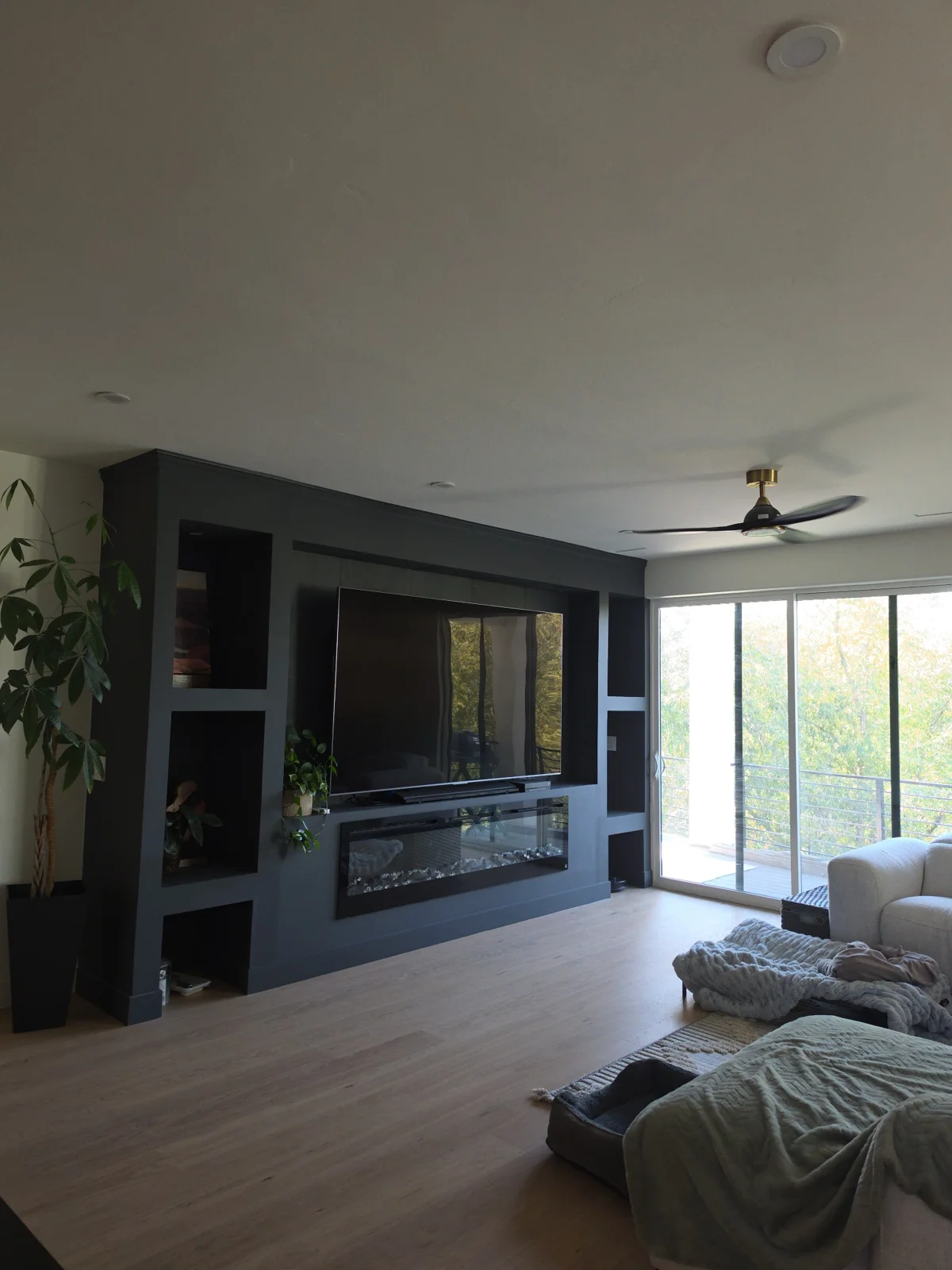
A well-renovated home should feel connected. Flooring, cabinetry, stone, lighting, and walls all contribute to that feeling. Custom paint work can tie those materials together while giving important parts of the house a stronger identity. Sometimes the most effective upgrade is a quiet wall finish that lets natural light reveal its character throughout the day.
Roman plaster: soft movement and a natural feel.
When discussing “Roman plaster,” first agree on the exact product and intended appearance. Roman-style decorative finishes and products sold as Roman Clay should not automatically be treated as the same material as traditional lime plaster. Portola’s Roman Clay, for example, is a plaster-like interior finish applied in overlapping layers to smooth walls. It can create subtle tonal movement and a low-sheen appearance.
For a renovation, consider this softer look in a primary bedroom, dining room, or a carefully chosen living-room feature wall. Warm ivory, muted taupe, and earthy neutrals can sit comfortably beside walnut, oak, and natural stone. Rather than introducing a bold new color, the finish adds variation within a restrained palette.
That is how it can elevate a room: an otherwise plain surface becomes part of the architecture. The result can feel more personal and layered without requiring another decorative element. Choose a sample that shows the actual hand-applied texture; a flat color chip cannot communicate that effect.
Venetian plaster: depth, refinement, and reflected light.
Traditional Venetian plaster is associated with lime-based decorative finishes. Some systems, such as Romabio’s Grassello Bio Traditional, produce a smooth, glossy surface with translucent depth and color variation. Products and application techniques differ, so the name alone does not specify the final sheen, durability, or preparation.
As a design choice, consider Venetian plaster for a formal entry, dining-room feature, or another surface you want to give a more refined presence. Its depth can complement restrained stone, brass accents, and clean-lined millwork. Use it deliberately: a finish with visible sheen may be most effective on one architectural element rather than every wall.
Lighting matters here. A sample that looks subtle under daylight may feel much more pronounced beside a wall sconce. Review the finish under the actual lighting before committing. For a fireplace surround, confirm the complete finish system and substrate are suitable for the specific heat exposure and installation.
What is three-tone paint?
For an interior renovation, a three-tone paint scheme typically means selecting three coordinated colors: one for the walls, one for trim and doors, and one for the ceiling. The exact grouping should be written into the scope; some projects assign doors, cabinetry, or accent surfaces differently. “Three-tone” describes the color plan, not three coats of paint.
Warm greige gives the room a calm foundation.
Soft charcoal defines the architectural edges.
Warm white keeps the overhead plane light.
Illustrative palette only. Final colors should be sampled in your space.
Three colors do not have to mean strong contrast. A warm neutral wall, a slightly deeper trim color, and a complementary off-white ceiling can look quietly tailored. A darker door and trim package creates a more graphic effect. What matters is whether the colors relate to the flooring, countertops, and woodwork already in the plan.
Color and sheen are separate decisions. Select a coating suited to each surface and its cleaning needs, then review how its sheen changes the appearance. Three tones can make doors and trim feel intentional, but the scheme works best when the transitions stay consistent through connected rooms.
Where should each finish be used?
| Renovation goal | Finish to consider | What to review first |
|---|---|---|
| A calm, textured bedroom or living wall | Roman-inspired matte finish | Movement, touch-up expectations, and maintenance |
| A more formal architectural focal point | Venetian plaster | Lighting, sheen, substrate, and applicator sample |
| Definition across several connected rooms | Three-tone paint scheme | Undertones, door and trim assignments, and room transitions |
| A wet or splash-prone surface | A system specifically approved for that exposure | Manufacturer guidance and the full waterproofing assembly |
Decorative plaster is not automatically a waterproof finish. A sealer does not make every product appropriate for a shower, backsplash, or other demanding location. Confirm the product, primer, substrate, protective coating, and maintenance requirements before choosing a finish for those areas. Some decorative surfaces are more delicate than conventional paint, and protective treatments may change the appearance.
You can also combine approaches. A three-tone scheme throughout the main rooms can provide continuity, while a single plaster feature introduces a custom moment. This layered approach gives the renovation a focal point without making every surface compete for attention.
How custom finishes elevate the whole home.
The strongest results come from proportion and consistency. A refined wall can make simple cabinetry feel more considered. A coordinated ceiling can support the sense of openness. A deliberate trim color can draw attention to the millwork you invested in. These choices create a more cohesive experience as you move through the house.
They do not guarantee a particular resale return. Their value is in the way the home feels and functions: materials look chosen together, focal points become clearer, and the finish work reflects the level of care in the renovation.
Decide early, then sample before the final application.
Discuss specialty finishes while planning the remodel, so surface preparation, trade sequencing, lighting, and budget are part of the scope. Review a physical sample with the selected flooring, stone, and cabinetry. Agree on the amount of movement, the sheen, the edges, and the maintenance expectations—not only the color name.
At High Altitude Renovations, custom finishes are part of the broader conversation about your home. We work with homeowners and designers to coordinate painting and finish work with custom carpentry, hardwood flooring, and the overall renovation. From Park City and Deer Valley to Davis, Salt Lake, and Weber counties, the goal is a space that feels thoughtfully finished.
Product & color references
These manufacturer resources inform the material descriptions. Specific products, suitability, and application requirements should be confirmed for your project; no manufacturer affiliation is implied.